Calibration and AI verification remain separate.
Menu
Theoretical physics · Mathematical chemistry
Mathematical structures for fundamental physics and theoretical chemistry
Research across spectral theory, quantum foundations, gravitation, and theoretical chemistry—where rigorous mathematics meets fundamental physical questions.
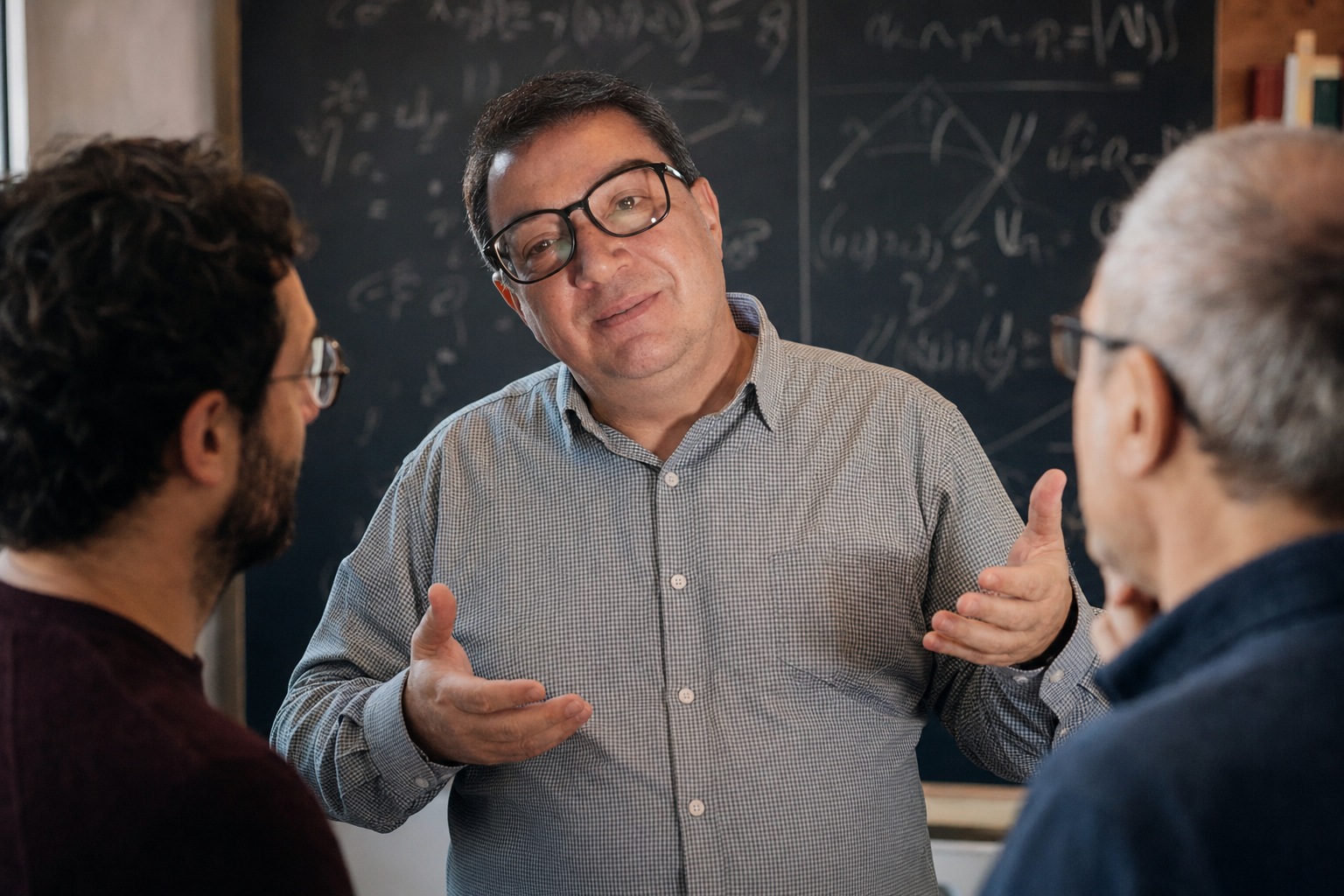
Spectral TheoryQuantum FoundationsGravitationTheoretical Chemistry
New features
What would you like to work on today?
Choose one path. Calibration and AI verification are separate areas with their own tools and results.
Choose your area
Calibration or AI verification?
Use voice only to select one area: say “Calibration” or “AI”. You will confirm before continuing.
Say “Calibration” or “AI”. The site will ask you to confirm your choice.
Each area shows only the inputs that belong to its task.
Results, limits and decisions remain explicit.
Research architecture
Four programmes, one standard of mathematical control.
The laboratory develops analytic and computational frameworks in which physical interpretation follows from explicit mathematical structure, not the reverse.
Spectral theory and operator methods
Self-adjoint operators, spectral projectors, resolvents, variational principles, and the analytic structure of physical evolution.
Quantum foundations
A precise separation of amplitudes, observables, probability laws, state updates, currents, and experimental records.
Gravitation and cosmology
Geometric field equations, relativistic consistency, early-universe structure, and analytically controlled dynamical models.
Theoretical and quantum chemistry
Molecular Hamiltonians, electronic structure, spectral constraints, intermolecular interactions, and multiscale physical modelling.
Mathematical and computational physics
Controlled numerical methods, verification, and computational experiments built around explicit mathematical hypotheses.

Working method
Proof, physical interpretation, and computation in one chain.
Problems are developed from explicit hypotheses through operator or geometric structure to physically testable consequences. Numerical work is used to interrogate the model, not to conceal an undefined one.
Domains before formulas
Operators are stated together with their spaces, domains, boundary conditions, and regularity assumptions.
Structure before interpretation
Physical claims are separated from the mathematical objects that support them, with no slogan replacing a proof.
Checks before conclusions
Limits, dimensions, asymptotics, normalization, and numerically accessible consequences are treated as part of the argument.
Perfis de entrada por técnica
Escolha o perfil de dados compatível com a sua medição.
Cada opção prepara nomes, unidades, exemplo, eixos, tolerância e gráficos. Todas chamam o mesmo motor protegido somente quando você decide executar.
💧 Perfil de Ácido–base
Transferência de leitura de pH
O segundo instrumento reproduz a curva de pH do instrumento confiável?
21 pares prontos. Os pontos do eixo coincidem.
🛡 Preparando a verificação Cloudflare…
As curvas aparecem sem gastar uma execução protegida.
Demonstração pública: até 6 execuções protegidas por origem em uma janela de 60 minutos. Preparar dados, trocar técnica e desenhar gráficos permanece livre; somente a execução no servidor consome uma chamada. Precisa de mais? Fale pelo WhatsApp ↗
Economia: trocar técnica, editar dados e desenhar gráficos não consome execução protegida. Somente o botão acima faz uma chamada ao servidor.
Referência, antes e depoisÁcido–base
Confiável Original Depois
Relação de transferência e reta ajustada
Execute para obter a reta e todas as figuras de mérito.
Resíduos depois do ajuste
Execute para ver os resíduos ponto a ponto.
Transfere a escala de resposta de pH. Não determina sozinho a identidade química da amostra. Este perfil usa o mesmo cálculo protegido de transferência afim escalar; o gráfico é desenhado no navegador e os dados só seguem ao servidor no clique final.
Ver exatamente o que o motor testa
O motor constrói uma relação afim unidimensional entre as respostas verticais de dois pares correspondentes, transforma a série do instrumento a ajustar e compara todos os pontos à tolerância declarada. Ele rejeita dados sem variação suficiente, com pares de eixo desalinhados ou com erro acima da tolerância. Não corrige silenciosamente curvatura residual, desalinhamento do eixo ou informação ausente; tampouco certifica a validade física ou metrológica específica da técnica.
Precisa transferir vetores ou matrizes completas?
Abra somente quando a resposta não puder ser tratada como uma escala unidimensional.
General architecture · conditional application
The protocol does not depend on the technique name.
Universality means a shared mathematical structure, not automatic approval. Each application needs sufficient paired states, demonstrated compatibility and independent validation.
Volumetry and wet chemistry
Acid–base · precipitation · complexometry · redoxCurves, equivalence points and paired responses can form the common construction space when the experimental design provides enough independent states.
Molecular spectroscopy
UV–Vis · fluorescence · NIR · FTIR · Raman · NMRSpectra and multichannel descriptors enter as numerical matrices. Compatibility is not assumed: rank, conditioning and validation decide.
Atomic spectrometry
AAS · ICP–OES · ICP–MS · XRFMultielement signals can be treated without changing the mathematical core, provided source and target share comparable labelled states.
Chromatography and coupled techniques
HPLC · UHPLC · LC–DAD · LC–MS/MS · GC–FID/TCD/ECD · GC–MS/MSAreas, heights, times or detector vectors can define the problem. The protocol does not correct chemical misalignment or invent missing peaks.
Electroanalysis and sensors
Potentiometry · conductometry · voltammetry · multichannel sensorsScalar or vector readings are accepted by the same architecture when the relationship between systems is observable in common states.
Other numerical measurements
Thermal analysis · gases · quantitative imaging · multisensor systemsThe architecture is general with respect to instrument type; a concrete application remains conditional on evidence and prospective validation.
Analytical instrumentation
Built for laboratory reality, bounded by laboratory evidence.
Calibration Transfer is a conditional transfer protocol, not a universal correction button. It is meaningful only where a common reference construction, response integrity and prospective verification can be demonstrated for the instrument pair.
01
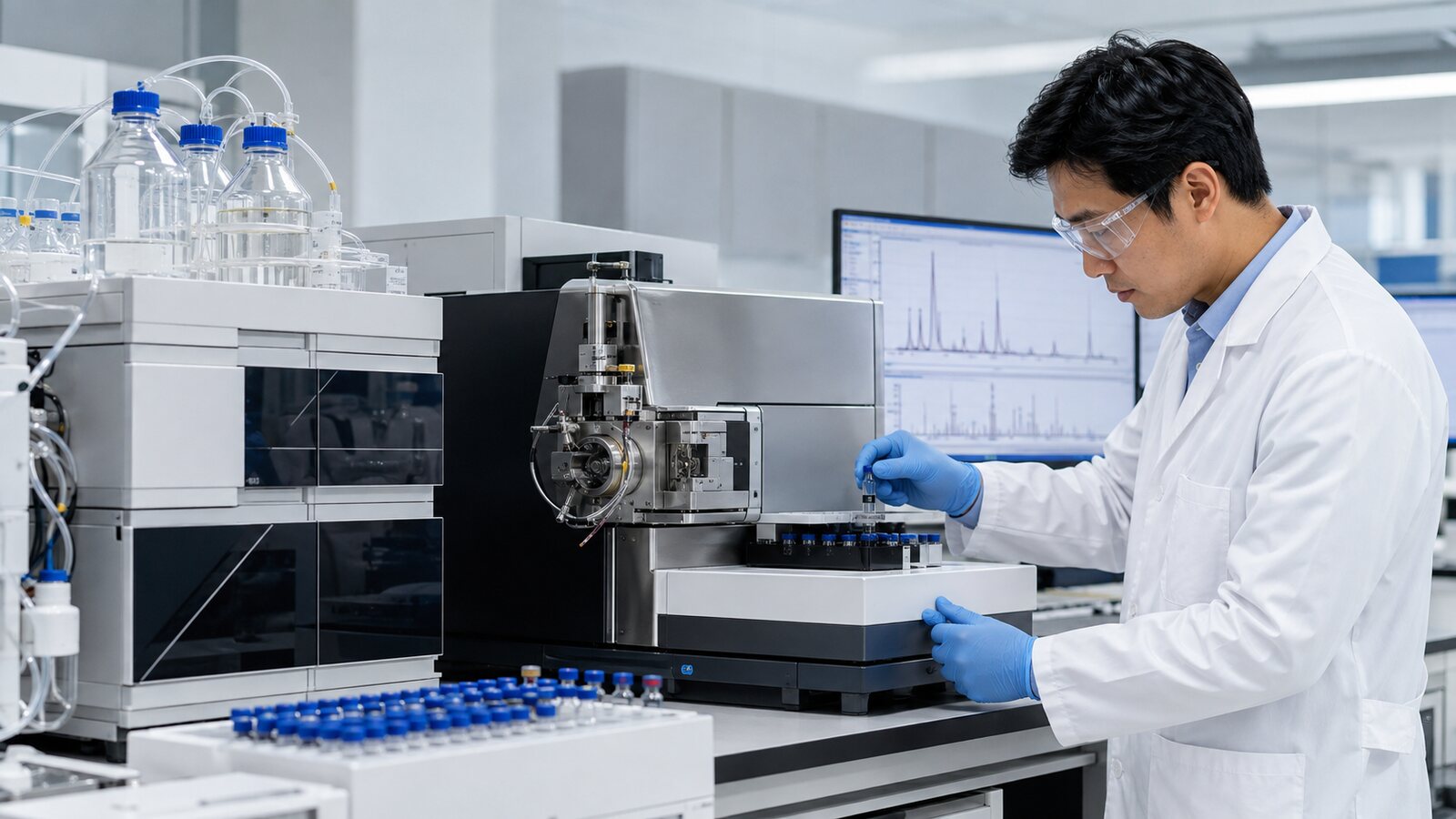
LC–MS/MS · HRMS · GC–MS
Mass spectrometry
High-dimensional detector responses make cross-platform comparability especially demanding. Calibration Transfer keeps the evidence, direction and numerical limits explicit.
02
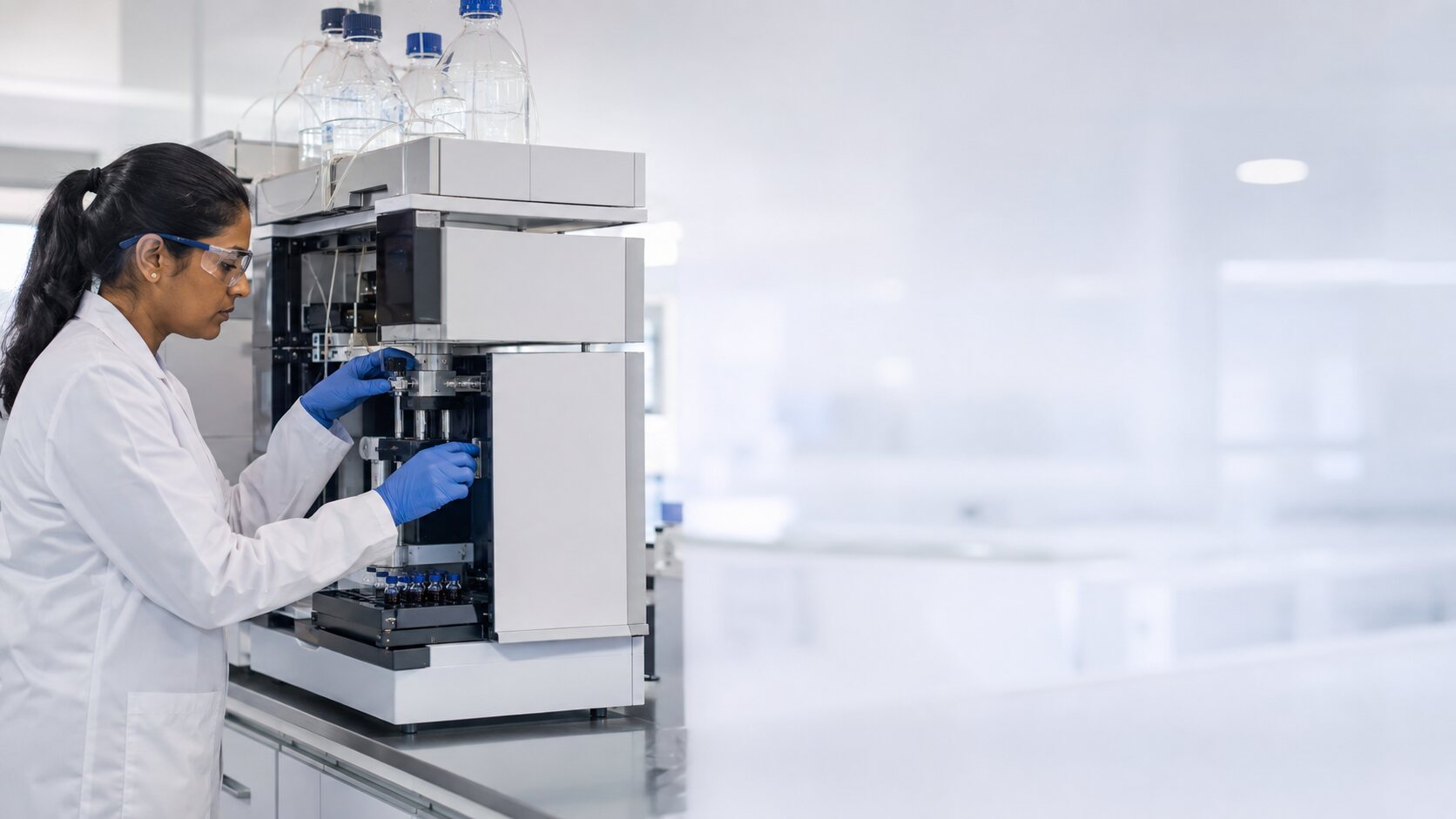
HPLC · UHPLC · process LC
Liquid chromatography
Use a common, labelled construction sequence to test whether a target detector can receive a source response without silently losing information.
03
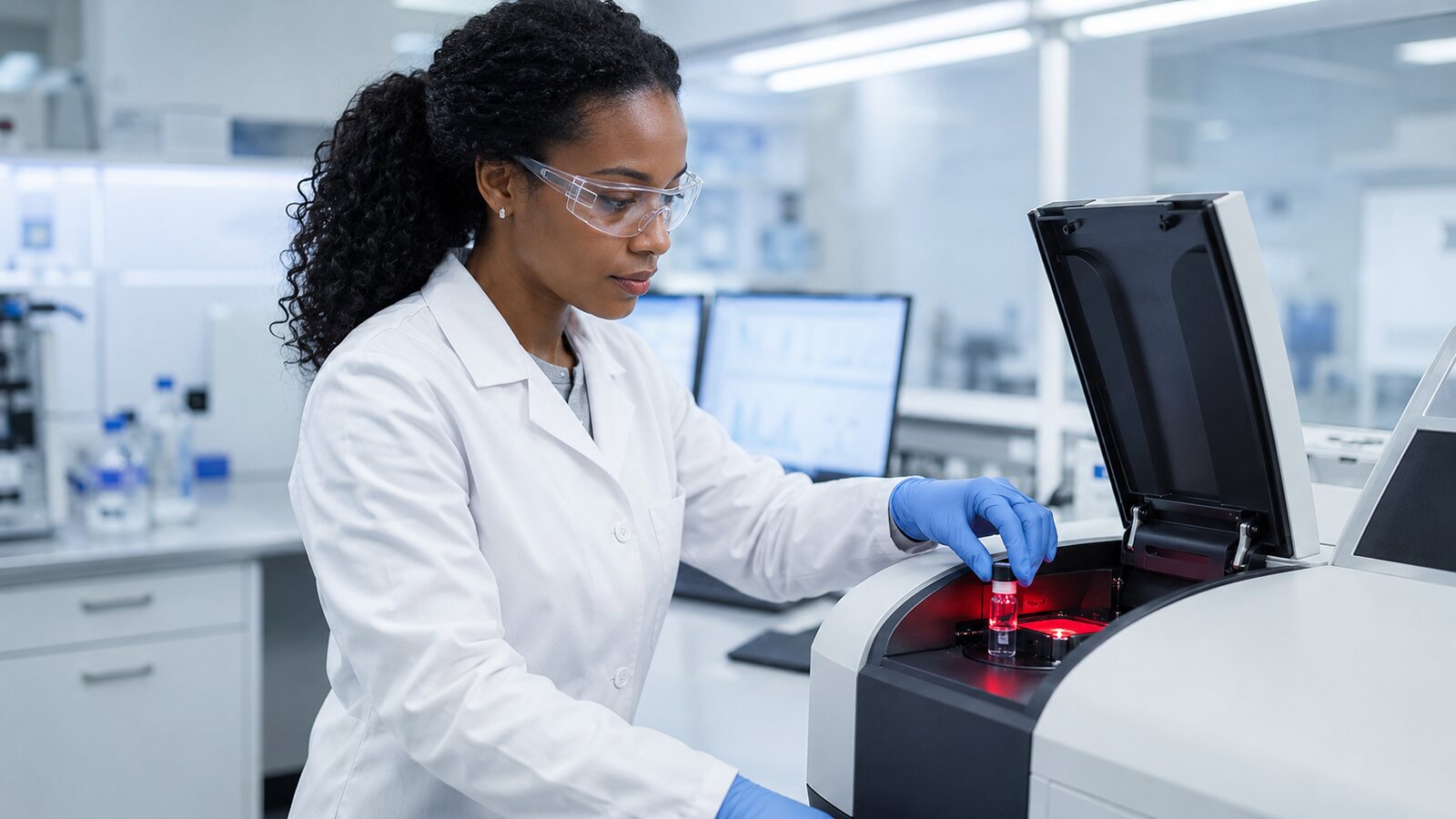
FTIR · NIR · Raman
Infrared and molecular spectroscopy
Calibration Transfer tests the response-space construction directly. It does not substitute a PLS model, interpolate missing channels or conceal an ill-conditioned transfer.
What the method is—and is not
Deterministic calibration core. No hidden model selection.
Exact conditional construction
The transfer is constructed as an affine map only after the labelled common-state matrix reaches the required rank and passes the declared conditioning threshold.
Rejection is a result
A singular, incomplete or unstable construction is rejected. The interface does not manufacture a plausible numerical answer from missing information.
Validation does not retrain the method
Voluntary cases enter an audit pool only. They must remain separated from frozen thresholds and prospective validation before they can support a new claim.
It is not generative AI, retraining, hidden PLS, missing-channel interpolation, black-box correction or a best-effort approximation.
It is a deterministic affine transfer derived from explicitly paired source and destination constructions. The mathematical solution is closed for an accepted construction, and rank and conditioning limits decide whether the transfer can exist.
The core uses no AI. Singular, incomplete or ill-conditioned data are rejected instead of being converted into a plausible-looking output.Laboratório de IA
Verifique respostas numéricas
Escolha o cálculo. O formulário certo abre aqui, sem levar você para outra parte do site.
PRIMARY KCT EXPERIMENTKnowledge Calibration Transfer — KCTTransfer knowledge as calibrated numerical representations.Experimental semantic pathway · Deterministic calibration coreTRY SEMANTIC KCT
Esses rótulos identificam o contexto do caso. O Gateway público executa somente as quatro famílias numéricas abaixo; aplicações mais amplas entram como estudo-piloto.
Exemplo prontoSistema linear · A x = b
Execuções disponíveis…Verificando o limite renovável…
🛡 Preparando a verificação Cloudflare…
Estado
Pronto. Um exemplo numérico está carregado.
Resultado protegido
AGUARDANDOO resultado verificado, os erros, as decisões PASS/REJECT e o recibo aparecerão aqui.
Área para programadores
Ligue o Gateway ao seu programa, agente de IA ou pipeline.
Se você só quer usar o site, pode ignorar esta seção. A tela já conversa com o servidor por baixo. Esta área existe para desenvolvedores e equipes de MLOps.
Avaliação lado a lado
Compare até três modelos, agentes ou versões do mesmo pipeline em uma única execução.
Decisão automatizável
Use PASS ou REJECT para permitir ou interromper uma etapa de teste ou implantação.
Evidência reproduzível
Guarde métricas e recibo JSON com hashes, versão do motor e identificação da execução.
Não é um juiz universal
O Gateway verifica somente as famílias numéricas publicadas e não avalia verdade factual ou qualidade textual.
Integração em três passos
Baixe o caso, chame a API e trate REJECT como falha do pipeline.
- 1.Baixe o JSON e substitua a matriz, o vetor e a resposta candidata.
- 2.Use uma chamada de servidor para
/api/transfercal-problem. - 3.Leia
comparisons[].acceptede arquive o recibo.
curl -sS -X POST "https://cosmophys.org/api/transfercal-problem" \
  -H "Content-Type: application/json" \
--data @calibration-transfer-case.jsonEscolha a linguagem e copie o exemplo.
Próximas integrações — não anunciadas como prontas
Expansão sem diluir o produto.
- verificação em lote;
- suítes de testes versionadas;
- webhooks de aprovação e rejeição;
- painel de regressão numérica;
- perfis de tolerância por ambiente.
Work with Cosmo Physics Labs
Pesquisa rigorosa transformada em trabalho técnico.
Serviços profissionais já podem ser contratados. Funções experimentais ou ainda não publicadas são tratadas primeiro como estudo-piloto.
AI Consultancy
Estratégia, avaliação técnica, scientific AI, agentes, RAG, embeddings, migração, quantização, deployment e MLOps.
Conversar sobre este serviço ↗Calibration Transfer Consultancy
Substituição e manutenção de instrumentos, transferência entre laboratórios, sensores, produção e frotas.
Conversar sobre este serviço ↗Lectures
Palestras científicas e técnicas para instituições, laboratórios e empresas.
Conversar sobre este serviço ↗In-company Training
Treinamentos presenciais preparados para o problema e a equipe da organização.
Conversar sobre este serviço ↗Live Online Training
Treinamento ao vivo por webconferência, com casos e acompanhamento técnico.
Conversar sobre este serviço ↗Custom Courses
Cursos sob medida em IA, métodos numéricos, física teórica e aplicações científicas.
Conversar sobre este serviço ↗Pilot Studies & Feasibility
Estudo inicial para determinar o que é suportado antes de qualquer implantação.
Conversar sobre este serviço ↗Technology & Licensing
Integração por API, implantação dedicada, licenciamento e aplicações institucionais.
Conversar sobre este serviço ↗Research · Consultancy · Technology
Descreva o projeto ou problema técnico.
Para casos maiores, mais execuções, integração empresarial ou matrizes fora do limite público, fale diretamente conosco.
Scientific collaboration
Serious questions benefit from serious disagreement.
Cosmo Physics Labs welcomes focused collaboration on mathematical physics, quantum theory, gravitation, molecular modelling, and problems that require a clean interface between analysis and computation.
Productive exchanges begin with a precise question, a declared mathematical setting, and a shared willingness to test the weakest point in the argument.
Discuss a research application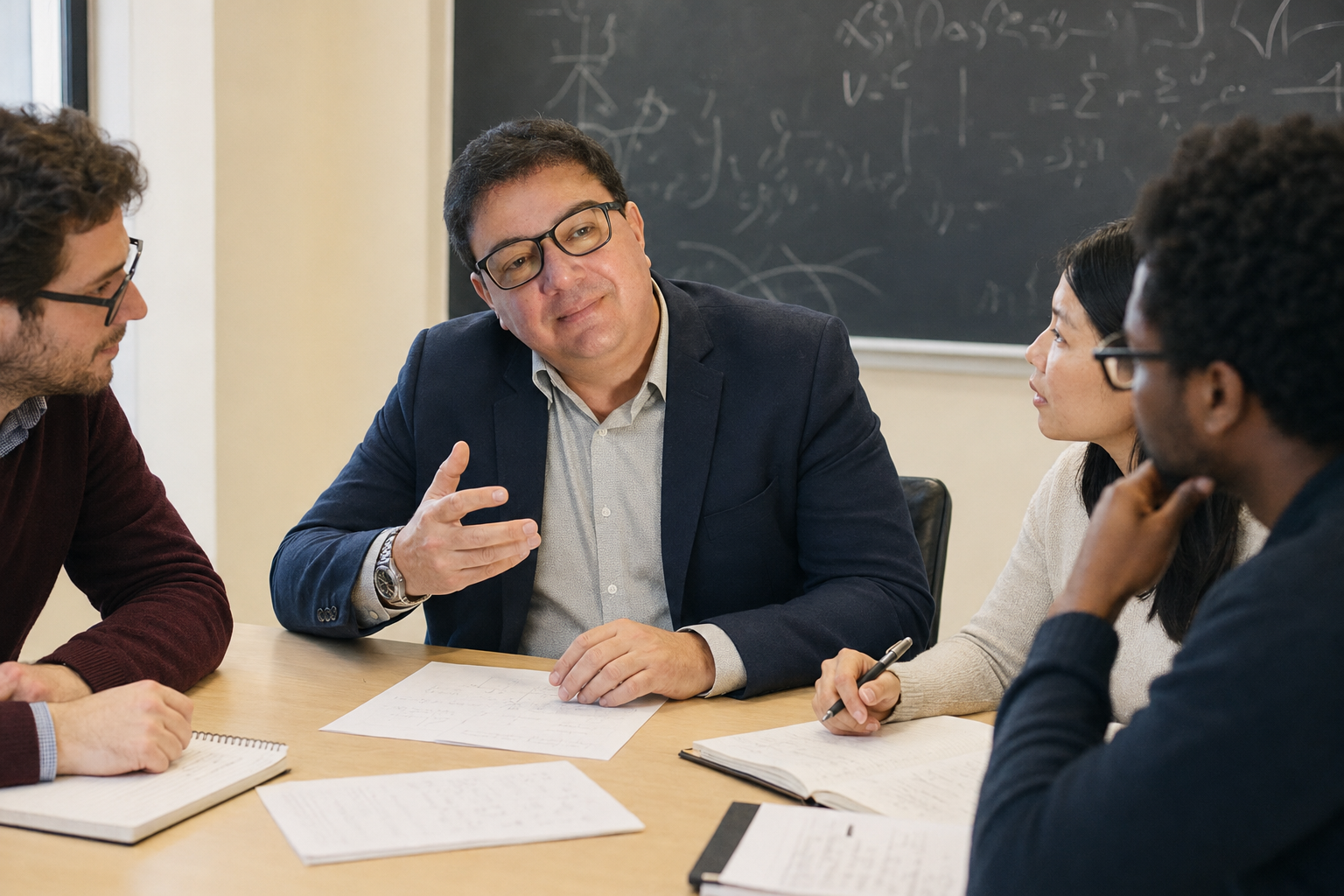
About
Professor Cesar A. Cohen de Mello
Cosmo Physics Labs · Division of Theoretical Physics
Campinas · São Paulo · Brazil
Research focused on explicit mathematical structures connecting spectral analysis, quantum theory, gravitation, theoretical chemistry and computational physics.
The laboratory is organised around long-form research, critical discussion, and technically transparent results suitable for scrutiny, extension, and independent reproduction.